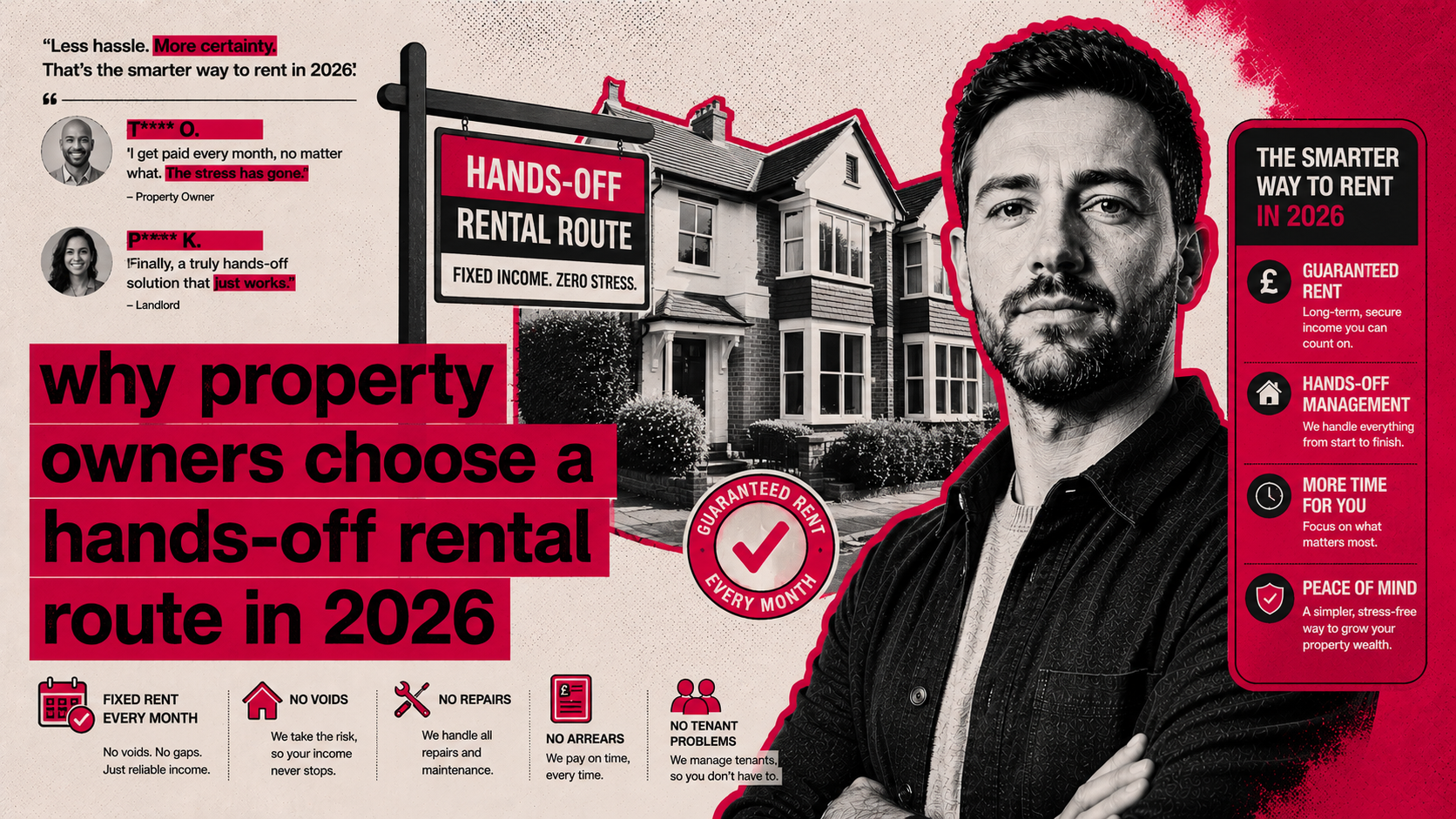
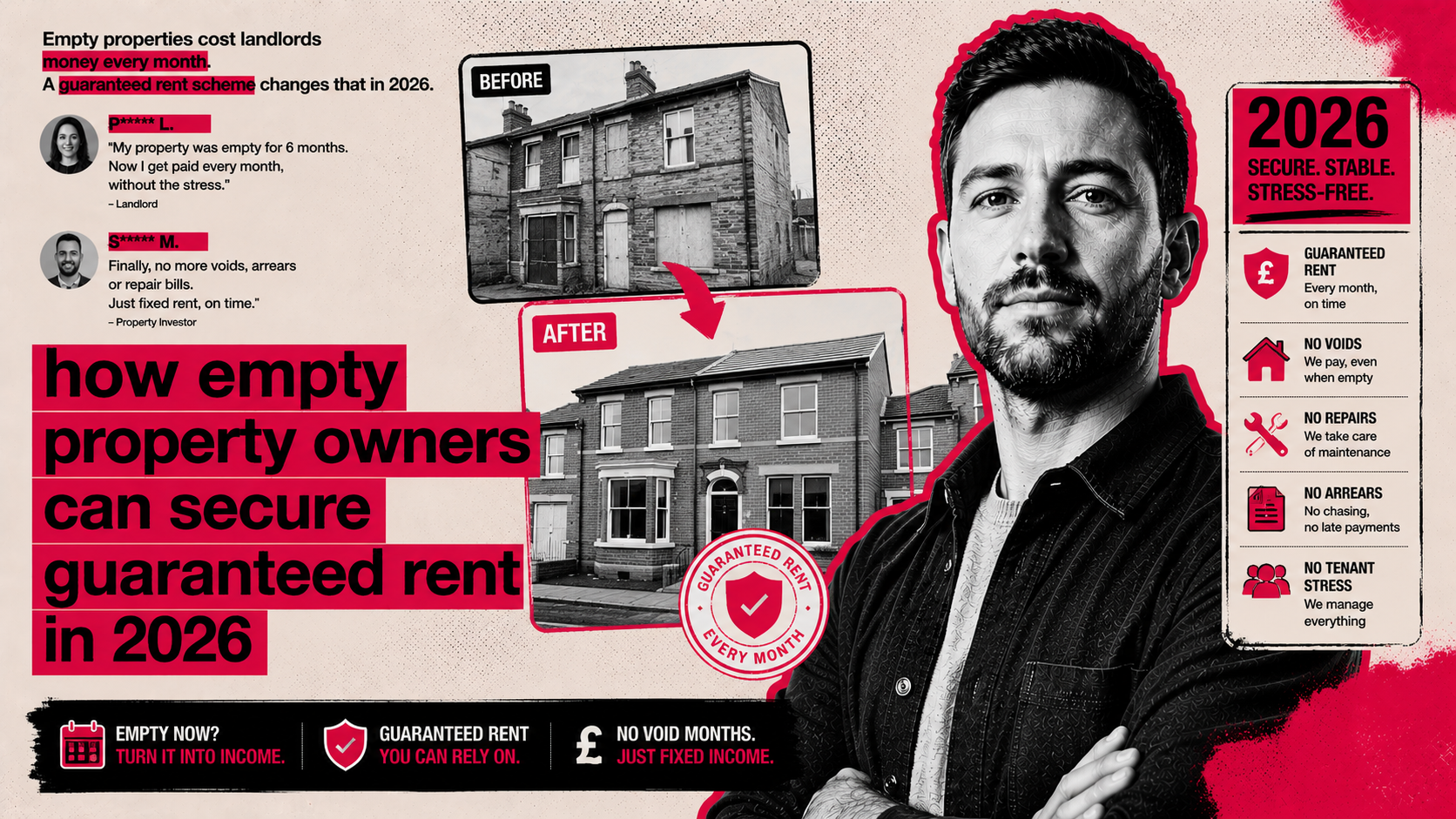
The Renters Rights Act 2026 will fundamentally change how Bradford landlords operate from May 2026.
Key reforms include the abolition of Section 21, mandatory periodic tenancies, stricter HMO compliance, and stronger tenant enforcement powers. For many landlords, this means higher risk, longer voids, and reduced control—unless your property operates under a commercial lease or guaranteed rent model, which sits outside most residential tenancy rules.
This guide explains exactly what’s changing, how it affects Bradford landlords specifically, and how many local landlords are protecting their income before the deadline.
What Is the Renters Rights Act 2026?
The Renters’ Rights Act replaces the old Renters Reform Bill and represents the biggest shake-up of private renting in 30 years.
Core changes landlords must prepare for:
- Section 21 abolished – no more “no-fault” evictions
- All tenancies become periodic – fixed terms removed
- Stricter possession grounds – longer notice periods
- Higher compliance enforcement – councils gain stronger powers
- New landlord register & ombudsman – greater scrutiny
Bradford Council has already signalled increased enforcement activity, especially for HMOs and higher-risk stock.
How the Renters Rights Act Affects Bradford Landlords
Bradford has one of the largest private rented sectors in West Yorkshire, with a high concentration of:
- HMOs
- Converted flats
- Older housing stock
- Selective & additional licensing zones
This means landlords here are more exposed than average.
Key Bradford-specific risks:
- Longer eviction timelines due to local court backlogs
- Higher likelihood of HMO inspections
- Increased penalties for non-compliance
- Rising void periods as tenants gain flexibility to leave at short notice
What Happens When Section 21 Is Abolished?
Without Section 21, eviction becomes slower, riskier, and more expensive.
Under the new system:
- Landlords must rely on Section 8 grounds
- Proof thresholds are higher
- Tenants can challenge possession more easily
- Court delays increase income uncertainty
In our experience managing supported and guaranteed rent housing across Bradford, eviction timelines under residential tenancies can stretch 6–9 months, even where rent arrears exist.
How Periodic Tenancies Impact Rental Income
With fixed terms removed:
- Tenants can leave with 2 months’ notice
- Landlords lose income predictability
- Void periods become harder to manage
- Re-letting costs increase
Result:
More income volatility at exactly the time compliance costs are rising.
This is why many Bradford landlords are moving away from residential ASTs altogether.
Are Commercial Leases Affected by the Renters Rights Act?
No.
Commercial leases—used in guaranteed rent and supported housing models—sit outside the Renters’ Rights Act framework.
Commercial lease benefits:
- Fixed income for 3–5 years
- No tenant-led early termination
- No Section 21 exposure
- No voids or arrears
- Management handled by the housing provider
This is why housing providers, councils, and CICs operate exclusively under commercial agreements.
How Guaranteed Rent Protects Bradford Landlords
Guaranteed rent schemes replace multiple risks with one secure contract.
What changes for landlords:
| Residential Letting |
Guaranteed Rent |
| Void periods |
No voids |
| Arrears risk |
Fixed monthly income |
| Evictions |
No tenant management |
| Compliance stress |
Fully managed |
| Short-term tenants |
Long-term lease |
At Citywide Housing, we lease properties on commercial terms, manage compliance to Decent Homes Standards, and work with registered providers and supported housing organisations across Bradford.
What Types of Bradford Properties Are Most Suitable?
We currently prioritise:
- HMOs (licensed or licensable)
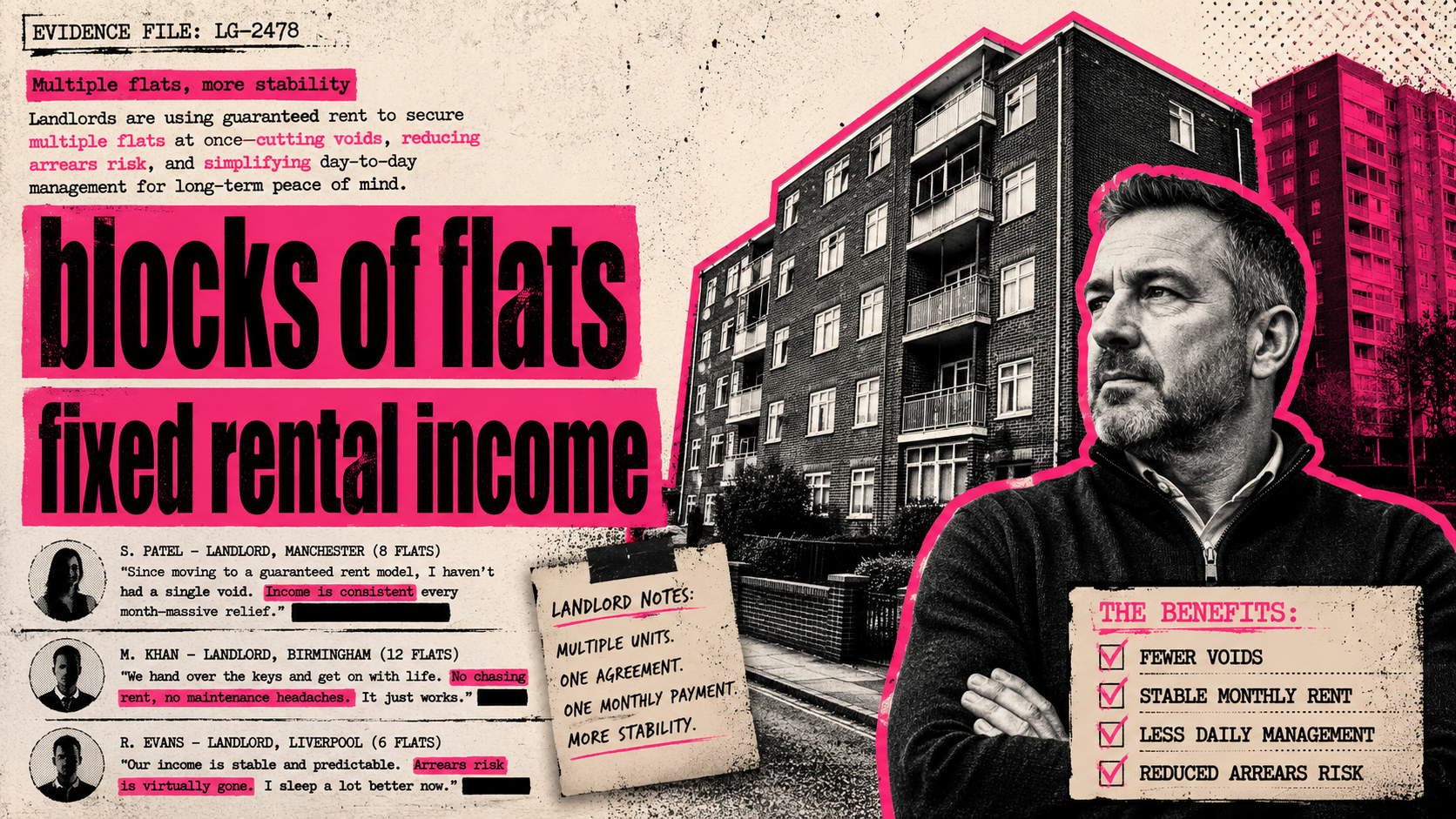
- Blocks of flats
- Family houses near amenities
- Properties suitable for supported housing use
Bradford postcodes with highest demand include:
BD1–BD9, BD13–BD15
What Bradford Landlords Should Do Before May 2026
Immediate actions checklist:
- Review your exposure to Section 21 removal
- Calculate potential void & arrears risk
- Assess HMO compliance readiness
- Explore commercial leasing alternatives
- Secure a long-term income strategy
Delaying decisions until after implementation may mean:
- Being locked into periodic tenancies
- Reduced leverage
- Higher transition costs
Why Bradford Landlords Are Switching Now
“We’re seeing landlords act before May, not after.”
Early movers benefit from:
- Stronger lease terms
- Faster onboarding
- Priority demand from housing providers
- Income certainty during legislative transition
Final Thought: Stability Beats Speculation in 2026
The Renters’ Rights Act doesn’t mean property is no longer profitable—it means traditional letting is no longer predictable.
Guaranteed rent and supported housing models offer what residential letting no longer can:
- Certainty
- Compliance
- Long-term stability
📞 Free Bradford Property Assessment (Before May 2026)
If you own a property in Bradford and want to understand:
- Whether it’s suitable for guaranteed rent
- How much income you could secure
- How to exit residential tenancy risk
Speak to Citywide Housing today.
One conversation could protect your income for the next 3–5 years.