




The Renters’ Rights Act is making many landlords question whether buy-to-let is still worth the time, risk and pressure. With rent increases limited to once a year, tenants able to challenge above-market increases, and possession rules changing, landlords are looking for more predictable rental models.
Citywide Housing Group offers landlords a more stable route through a guaranteed rent scheme, 3 to 5 year commercial leases, market rents paid, no voids, no arrears, no repairs and no tenant issues.
The Renters’ Rights Act has changed how landlords look at buy-to-let property. Many landlords are not simply asking what the law says, they are asking whether the numbers still work. When mortgage costs, repair bills, compliance pressure, void periods and tenant risk are added together, traditional letting can start to feel less rewarding.
For landlords who want stable income without constant involvement, guaranteed rent offers a more practical way forward.
Buy-to-let used to feel simple for many landlords.
Buy a property. Find a tenant. Collect rent. Build long-term wealth.
However, that model now feels more pressured. Landlords are dealing with:
The fear is not just one rule change. The fear is that buy-to-let is becoming harder to manage while the landlord still carries the financial risk.
In our experience, this is one of the biggest concerns landlords now have: “Will my property still produce reliable income after all the costs and stress?”
The Renters’ Rights Act affects profitability because it changes how landlords manage rent, tenancy structure and possession.
From 1 May 2026, landlords must use the Section 13 process for rent increases, and rent cannot be increased more than once a year. Tenants can also challenge a proposed rent increase if they believe it is above market rent.
That means landlords may face more pressure when trying to balance rising costs with rental income.
The Renters’ Rights Act arrives at a time when many landlords are already facing higher costs.
These can include:
If rent does not keep pace with costs, the property can quickly become less profitable.
That is why many landlords are now looking at fixed rental income instead of hoping every tenancy runs smoothly.
Traditional letting can still work, but it often leaves the landlord exposed.
A letting agent may help with day-to-day admin, but the landlord may still be responsible for the financial impact of:
| Risk | What It Means for Landlords |
|---|---|
| Void periods | No rent while the property is empty |
| Rent arrears | Mortgage still needs paying |
| Repairs | Unexpected bills reduce profit |
| Tenant disputes | More time and emotional stress |
| Compliance | Mistakes can become costly |
| Re-letting | More fees, viewings and delays |
This is why the question is changing.
Landlords are no longer only asking, “How much rent can I get?”
They are asking, “How much rent will I actually keep after stress, costs and risk?”
Citywide Housing Group gives landlords a different option.
Instead of relying on short-term private letting, landlords can hand over suitable properties through a long-term commercial lease agreement.
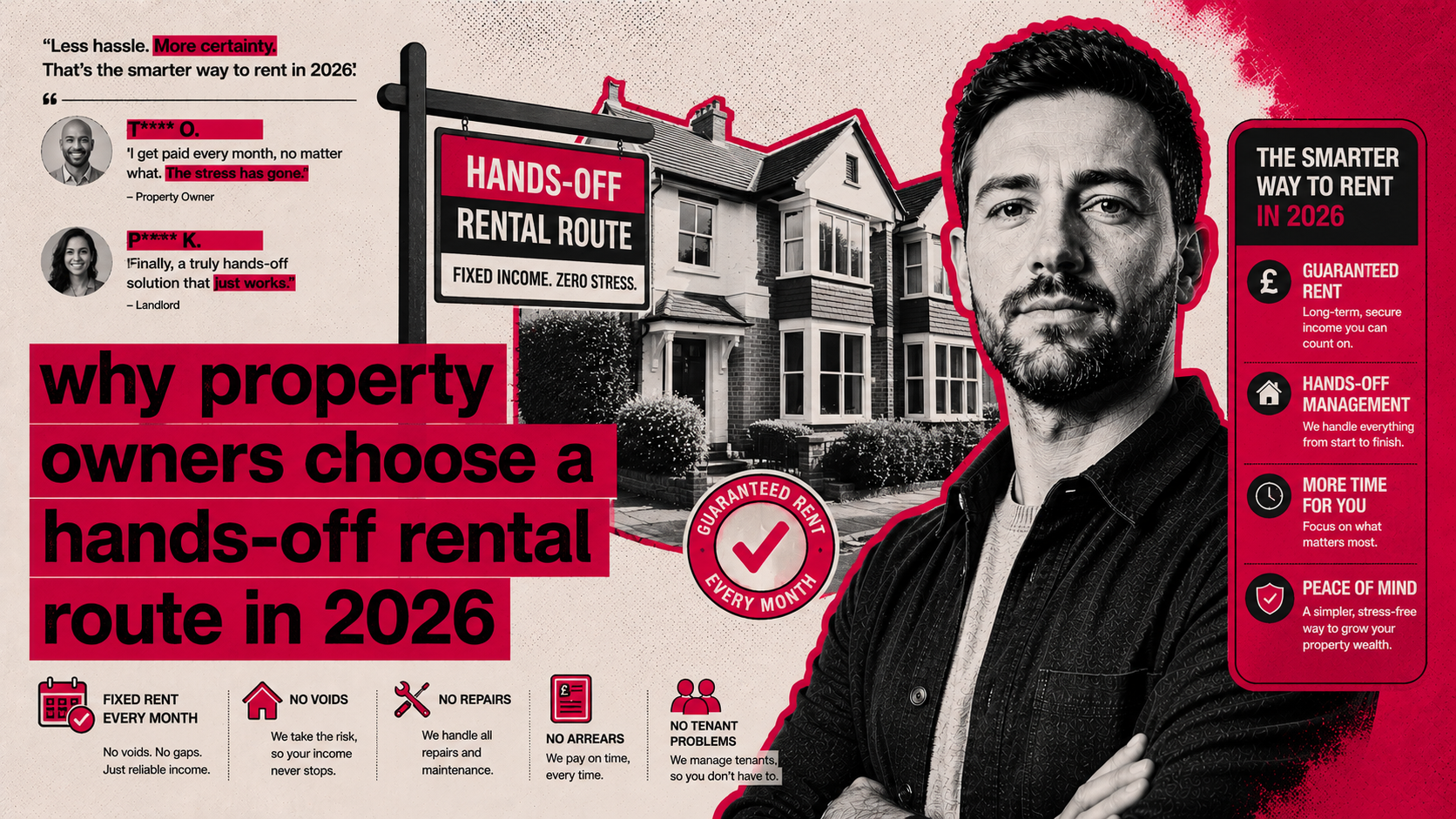
Citywide Housing Group’s core landlord benefits include:
Citywide Housing Group’s own website material highlights fixed guaranteed rent, no late payments, no void periods, no arrears, no maintenance calls, no maintenance costs and no repair bills as key benefits of the guaranteed rental scheme.
The Renters’ Rights Act has made fixed rental income more attractive because landlords want certainty.
With guaranteed rent, the landlord is not relying on a tenant paying each month in the traditional way. The rent is agreed under the lease, giving the landlord a clearer view of income over the lease term.
That means fewer income surprises and a more predictable property investment.
Many landlords do not want to sell their property. They still believe in property as a long-term investment.
What they want is less stress.
A long-term commercial lease can help landlords keep the asset while removing many of the common headaches linked to traditional letting.
Citywide Housing Group’s FAQ material states that the majority of leases are for three to five years, with some requiring longer leases, and that leases can have options to renew beyond the original period.
This matters because landlords want:
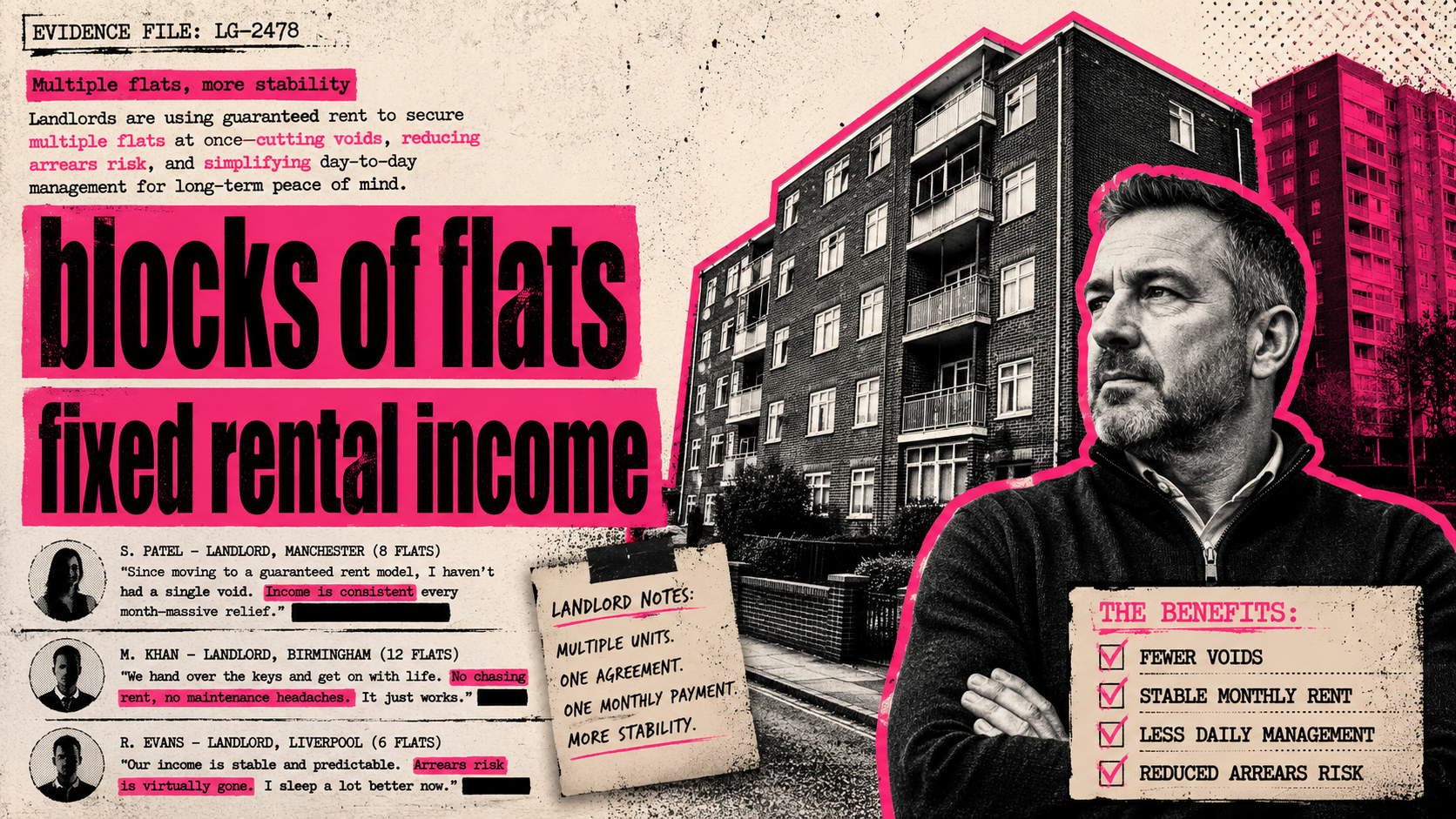
For landlords with HMOs, family houses, flats or blocks of flats, this can be a strong alternative to traditional buy-to-let letting.
For many landlords, the biggest fear is not the Renters’ Rights Act itself.
The real fear is that the property becomes a burden.
That burden can look like:
A property should support your financial goals. It should not constantly drain your time, energy and cash flow.
This is where Citywide Housing Group’s model becomes attractive. It is built around fixed income, reduced landlord involvement and long-term security.
For official landlord guidance on the Renters’ Rights Act, visit:
https://www.gov.uk/guidance/renters-rights-act-an-overview-for-landlords
For NRLA guidance on Renters’ Rights Act changes for existing tenancies, visit:
https://www.nrla.org.uk/resources/renters-rights/existing-tenancies-renters-rights-act
The Renters’ Rights Act has made many landlords question whether traditional buy-to-let still gives them enough reward for the risk.
The issue is not only regulation. It is the combination of rising costs, compliance pressure, tenant risk, void periods, arrears and repair bills.
Citywide Housing Group offers landlords a more stable alternative through guaranteed rent, 3 to 5 year commercial leases, market rents paid, no voids, no arrears, no repairs and no tenant issues.
If you own an HMO, family house, flat, block of flats or another suitable rental property, speak to Citywide Housing Group today.
Arrange a free property assessment and find out how much guaranteed rent your property could achieve.
Call: 0113 323 0678


Join our email mailing list to receive weekly tips, industry insights + more.

TL;DR The Renters’ Rights Act is making many landlords question whether buy-to-let is

TL;DR The Renters’ Rights Act has made many landlords worry about losing control

TL;DR The Renters’ Rights Act is making many landlords think carefully about income
Fill out the form for a free consultation call and let us take care of your property, hassle-free.