





Citywide Housing

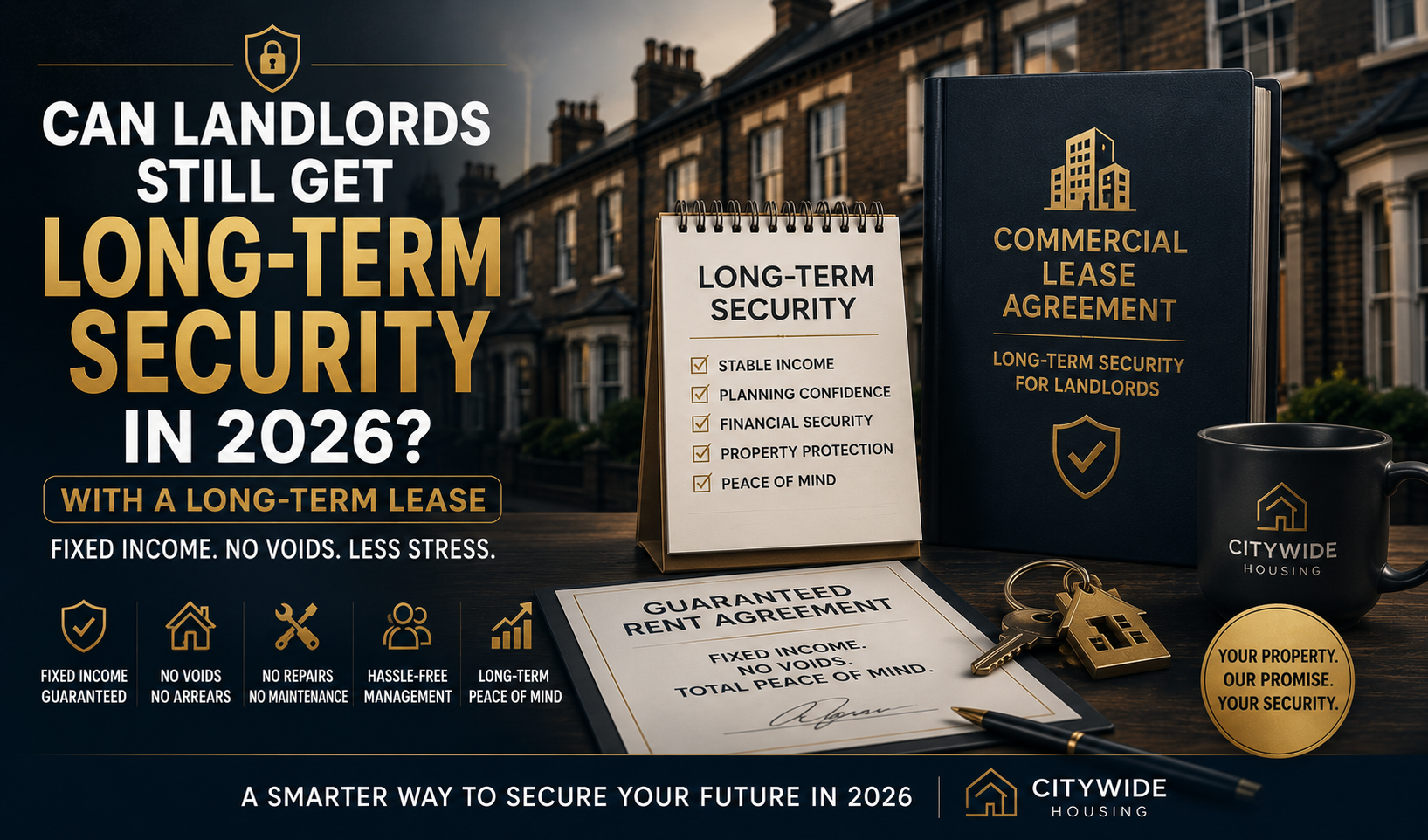
Can Landlords Still Get Long-Term Security in 2026 With a Long-term lease?

TL;DR

A Long-term lease can still give landlords security in 2026, especially when used as part of a commercial lease arrangement with guaranteed rent. While private rental rules have changed, suitable landlords can still secure more predictable income through Citywide Housing’s 3 to 5 year commercial leases, with no voids, no arrears, no repairs and no tenant issues.
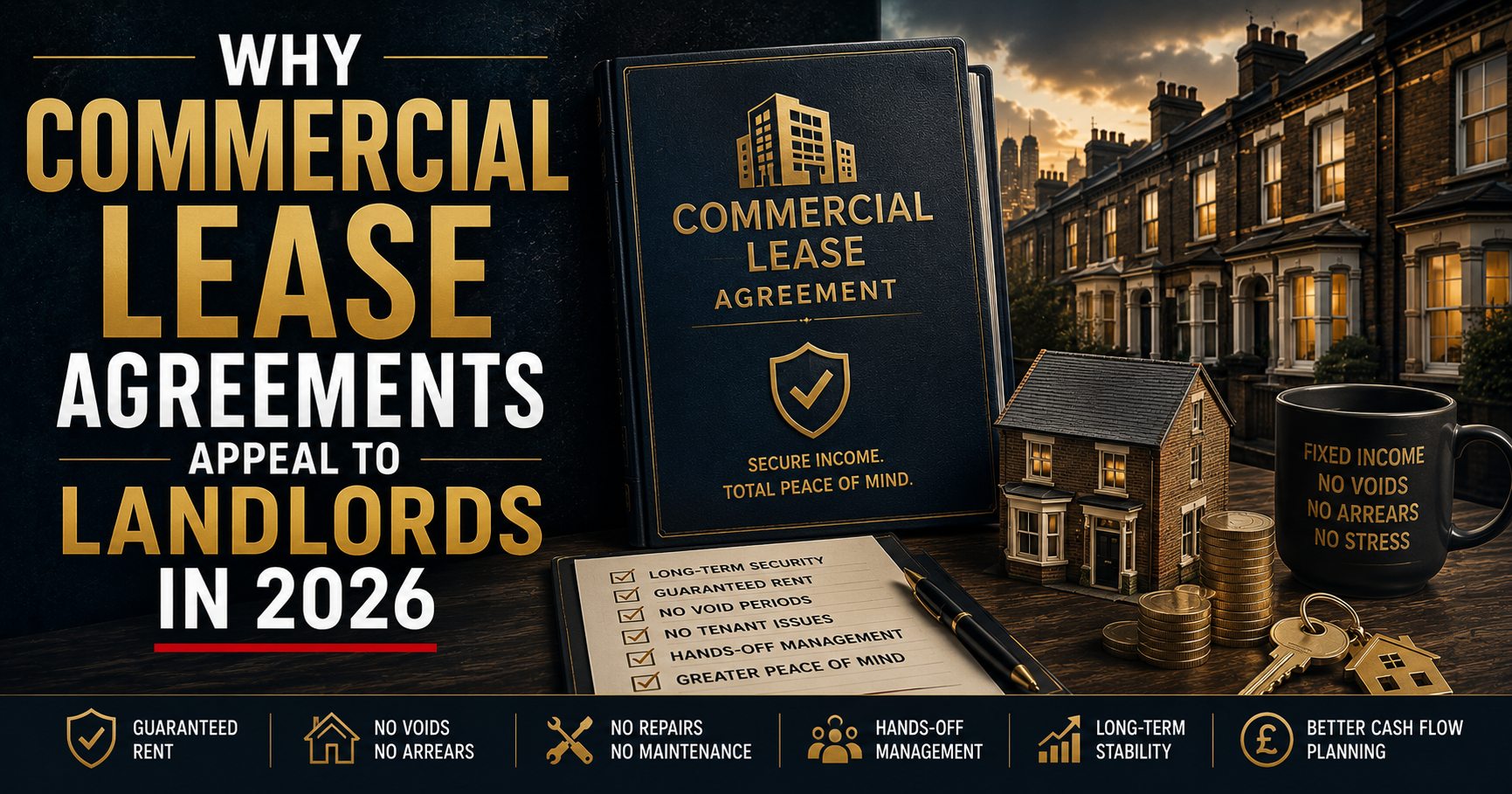
What’s in This Article:

  • Why landlords want long-term security in 2026
  • How a Long-term lease gives landlords more certainty
  • Why traditional letting feels less predictable
  • How guaranteed rent supports long-term income
  • What landlords should check before signing a lease
  • Which properties may be suitable
  • Final thoughts and next step

Introduction

A Long-term lease can help landlords secure more predictable rental income in 2026, even as private rental rules continue to change. Many landlords want stable rent, fewer voids, less arrears risk and reduced day-to-day involvement. A commercial lease with guaranteed rent can offer a practical route for landlords who want long-term security without the usual tenant stress.

For many property owners, the issue is not whether there is demand for rental homes. The issue is whether the income is stable enough, simple enough and worthwhile enough to continue.

That is why long-term lease options are becoming more important for landlords who want certainty.

Why Landlords Want Long-Term Security in 2026

Landlords want long-term security because traditional letting can feel more uncertain than before.

In 2026, landlords are thinking carefully about:

  • Changing rental rules
  • Rent arrears
  • Void periods
  • Repair costs
  • Tenant issues
  • Compliance responsibilities
  • Possession processes
  • Rising management pressure
  • Whether to keep or sell their property

Many landlords do not want to leave the property market. They want their property to work better for them.

They want steady income, fewer surprises and less involvement.

This is especially true for landlords with:

  • HMOs
  • Blocks of flats
  • Family houses
  • Self-contained flats
  • Larger portfolios
  • Properties managed from a distance

A long-term arrangement can help reduce uncertainty and make property ownership feel more manageable.

How a Long-term lease Gives Landlords More Certainty

A Long-term lease gives landlords more certainty by creating a clearer rental agreement over a longer period.

With Citywide Housing, suitable landlords can benefit from:

  • Guaranteed rent
  • Market rents paid
  • No voids
  • No arrears
  • No repairs
  • No tenant issues
  • 3 to 5 year commercial leases
  • Longer-term options where suitable

This gives landlords more confidence when planning income.

Instead of relying on repeated short-term lettings, a commercial lease can provide a more stable structure.

Guaranteed Rent Scheme

Why a Long-term lease matters after rental rule changes

A Long-term lease matters after rental rule changes because landlords are looking for income they can plan around.

Private renting has changed. Many landlords now need to think more carefully about how they manage possession, rent increases, compliance and tenant-related risk.

A long-term commercial lease can help landlords step away from the day-to-day uncertainty of private letting.

It can support:

  • More predictable monthly income
  • Fewer re-letting cycles
  • Less exposure to tenant turnover
  • Reduced void risk
  • Reduced arrears risk
  • A more hands-off property model

For landlords who value certainty, this can be a major advantage.

Why Traditional Letting Feels Less Predictable

Traditional letting can still work, but it often depends on several things going right at the same time.

The landlord needs:

  • The property to stay occupied
  • The tenant to pay on time
  • Repairs to stay manageable
  • Compliance documents to remain up to date
  • Tenant communication to run smoothly
  • Rent increases to be handled properly
  • Any possession process to be managed correctly

If one part fails, the landlord can lose income or time.

For example, a landlord may expect £1,200 per month, but if the property is empty for two months, that is £2,400 in lost rent before repairs, bills, advertising or re-letting costs are considered.

This is why landlords should look at real annual income, not just advertised monthly rent.

Long-Term Security vs Short-Term Letting

The difference between long-term security and short-term letting is important.

AreaTraditional LettingCitywide Housing Commercial Lease
Rent incomeDepends on tenant paymentAgreed monthly rent
VoidsPossibleNo voids
ArrearsPossibleNo arrears
RepairsOften landlord concernNo repairs
Tenant issuesCan involve landlordNo tenant issues
Lease lengthOften less predictable3 to 5 year commercial leases
Landlord involvementCan be activeMore hands-off
Income planningCan fluctuateMore predictable

For landlords who want control, traditional letting may still suit them.

For landlords who want long-term income without daily involvement, a commercial lease may be more attractive.

How Guaranteed Rent Supports Long-Term Income

Guaranteed rent supports long-term income by giving landlords an agreed monthly payment under the lease.

This can help landlords avoid common rental income problems, including:

  • Missed rent
  • Late payments
  • Empty periods
  • Re-letting gaps
  • Repair deductions
  • Tenant-related disruption
  • Unplanned cash flow pressure

With Citywide Housing, the offer is built around fixed rental income and reduced landlord stress.

This is not only about receiving rent. It is about having a clearer investment structure.

For more information, visit:
https://www.citywidehousing.co.uk/guaranteed-rent/

Why Commercial Leases Appeal to Tired Landlords

Commercial leases appeal to tired landlords because they can reduce the workload linked to traditional letting.

Many landlords are tired of:

  • Chasing rent
  • Arranging repairs
  • Handling tenant complaints
  • Dealing with empty periods
  • Managing compliance pressure
  • Re-letting properties
  • Responding to issues outside working hours

A long-term commercial lease can make the property feel more like an investment again.

The landlord keeps the asset, but the day-to-day pressure is reduced.

In our experience, this is one of the biggest reasons landlords explore guaranteed rent. They are not always looking for the highest possible rent. They are looking for rent that is reliable, simple and less stressful.

What Landlords Should Check Before Signing a Lease

Before signing any lease, landlords should understand the agreement clearly.

Key questions include:

  • What is the agreed monthly rent?
  • How long is the lease?
  • Can the lease be renewed?
  • What property standards are required?
  • What compliance documents are needed?
  • What happens before handover?
  • What responsibilities remain with the landlord?
  • Does the lease fit your long-term plans?

Landlords should always read the lease carefully and take professional advice where needed.

A long-term lease should give confidence, not confusion.

Which Properties May Be Suitable?

Citywide Housing may consider different property types depending on demand, location, condition and compliance.

Suitable properties may include:

  • HMOs
  • Blocks of flats
  • Family houses
  • Self-contained flats
  • Larger residential properties
  • Properties suitable for supported housing use

Citywide Housing works across key regions including:

  • West Yorkshire
  • South Yorkshire
  • Greater Manchester
  • Lancashire
  • Humberside
  • The North East

Before any property is accepted, Citywide Housing will review suitability. If works are needed, the landlord can be advised before handover.

For landlord information, visit:
https://www.citywidehousing.co.uk/landlords/

How the Citywide Housing Process Works

The Citywide Housing process is designed to give landlords clarity before they make a decision.

A typical process may include:

  1. Initial enquiry
  2. Property location review
  3. Property assessment
  4. Compliance and document check
  5. Rental offer
  6. Commercial lease agreement
  7. Property handover
  8. Agreed monthly rent payments

This helps landlords understand whether their property is suitable and what needs to happen next.

The aim is to create a smoother route from enquiry to long-term rental income.

Is a Long-Term Lease Right for Every Landlord?

A long-term lease is not right for every landlord.

It may suit you if you want:

  • Fixed monthly income
  • No voids
  • No arrears
  • No repairs
  • No tenant issues
  • A 3 to 5 year commercial lease
  • Less day-to-day involvement
  • A more predictable property investment

It may not suit you if you want full control over day-to-day occupation, short-term letting decisions or frequent rent changes.

The right option depends on your goals, property type and how involved you want to be.

Conclusion: Long-Term Security Is Still Possible

Landlords can still get long-term security in 2026, but the right structure matters.

Traditional letting may feel less predictable for landlords who are tired of voids, arrears, repairs and tenant issues. A long-term commercial lease with guaranteed rent can offer a more stable alternative.

Citywide Housing helps suitable landlords secure agreed monthly rent, no voids, no arrears, no repairs, no tenant issues and 3 to 5 year commercial leases.

If you own an HMO, block of flats, family house or suitable rental property, speak to the Citywide Housing team today for a free property assessment.

Share

Did you enjoyed this article?

Join our email mailing list to receive weekly tips, industry insights + more. 

Email Mailing List Sign Up

Discover Relevant Articles and Resources

Ready to Secure Your Guaranteed Rent?

Fill out the form for a free consultation call and let us take care of your property, hassle-free.

Book a Free Consultation Call

We are only accepting inquiries from landlords. Thank you for understanding.

Book a Free Call to Discuss Your Eligibility for Guaranteed Rent

Book a Free Call to Discuss Your Eligibility for Guaranteed Rent

Book a Free Consultation Call

We are only accepting inquiries from landlords. Thank you for understanding.