






Citywide Housing

Renters’ Rights Act: Are Landlords Worried About Getting Their Property Back?

TL;DR

The Renters’ Rights Act has made many landlords worry about getting their property back if a tenancy goes wrong. From 1 May 2026, Section 21 no-fault evictions ended for private rentals in England, meaning landlords must rely on legal possession grounds instead.

For landlords who want less exposure to possession stress, Citywide Housing Group offers a guaranteed rent scheme with 3 to 5 year commercial leases, market rents paid, no voids, no arrears, no repairs and no tenant issues.

What’s in This Article:

  • Why possession worries landlords
  • How the Renters’ Rights Act changes the process
  • Why traditional letting can feel less secure
  • How Citywide Housing Group reduces landlord risk
  • Why long-term commercial leases offer more certainty
  • How to get started with Citywide Housing Group

Introduction

The Renters’ Rights Act has changed one of the biggest areas of landlord confidence: possession. Many landlords are asking what happens if they need their property back, if a tenant stops paying, or if the tenancy becomes difficult. Without Section 21, landlords now need a clear legal reason and the correct process.

That is why many landlords are looking for a more stable, hands-off alternative.

Why Possession Worries Landlords

Possession worries landlords because property is still a major financial asset.

A landlord may need the property back because:

  • They want to sell
  • They need to move family into the property
  • The tenant has stopped paying rent
  • The tenant has breached the agreement
  • The property needs major work
  • The investment no longer works financially

The fear is not always about removing a good tenant. In many cases, landlords are worried about what happens when things go wrong.

In our experience, landlords want confidence that they can protect their asset, protect their income and act when they genuinely need to.

How the Renters’ Rights Act Changes Possession

The Renters’ Rights Act changes possession because landlords can no longer use Section 21 as a general no-fault route.

Government guidance confirms that from 1 May 2026, the Act abolished assured shorthold tenancies and ended Section 21 no-fault evictions in the private rented sector in England.

This means landlords must use Section 8 possession grounds where they need to regain possession.

Renters’ Rights Act and Section 8 grounds

Under the new system, landlords need to rely on specific legal grounds.

Government guidance on possession grounds applies to private landlords and other landlords letting properties on assured tenancies. The NRLA also explains that, from 1 May 2026, most existing assured shorthold tenancies converted into assured periodic tenancies, fixed terms ended, Section 21 was abolished, and new rent rules applied.

For landlords, this can create concern around:

  • Using the correct notice
  • Choosing the correct possession ground
  • Keeping proper records
  • Waiting for the notice period
  • Applying to court if needed
  • Dealing with delays and uncertainty

That is why possession reform feels stressful for landlords who prefer simple, predictable investment income.

Guaranteed Rent Scheme

Why Traditional Letting Can Feel Less Secure

Traditional letting can still work, but it can leave the landlord exposed if the tenancy becomes difficult.

Traditional Letting ConcernLandlord Risk
No Section 21 routePossession depends on legal grounds
Tenant arrearsIncome stops but costs continue
DisputesMore time and paperwork
Court processCost, delay and uncertainty
Void after possessionFurther lost income
Re-lettingNew fees and more admin

A letting agent may help with notices and admin, but the landlord may still carry the financial and emotional pressure.

The real question is simple:

Can the landlord afford months of uncertainty if something goes wrong?

For many landlords, the answer is no.

How Citywide Housing Group Reduces Landlord Risk

Citywide Housing Group gives landlords a different route.

Instead of relying on traditional private letting, landlords can lease suitable properties through a long-term commercial lease arrangement.

Citywide Housing Group’s core landlord benefits include:

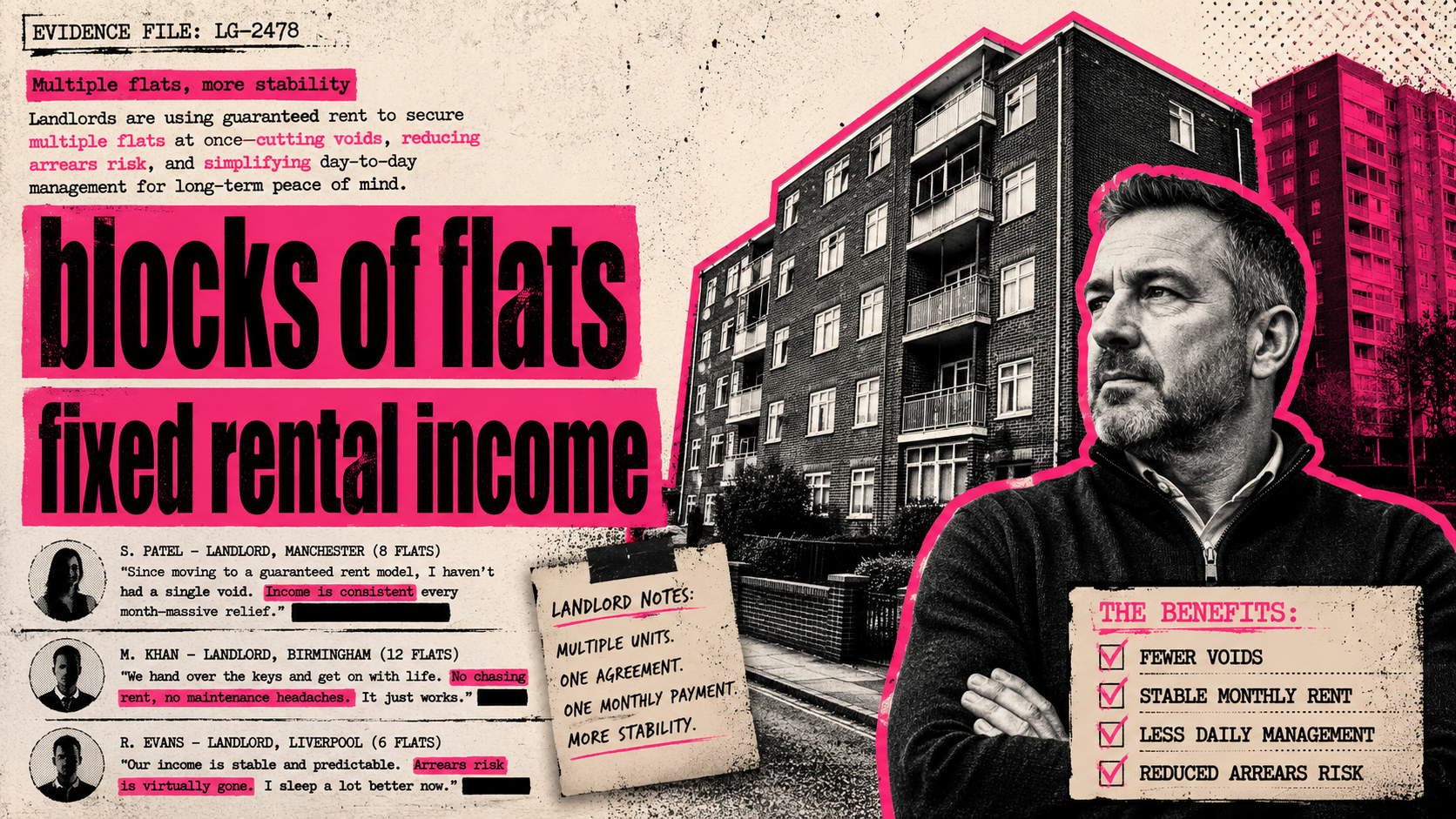
  • Guaranteed Rent
  • 3 to 5 year commercial leases
  • Market rents paid
  • No voids
  • No arrears
  • No repairs
  • No tenant issues

Citywide Housing Group’s website text explains that landlords benefit from fixed monthly rental income through the Guaranteed Rental scheme, while day-to-day responsibilities such as lettings, repairs, inspections, void works and tenancy management difficulties are handled as part of the arrangement.

This gives landlords a more predictable way to hold their property without constant tenant-related pressure.

Why Long-Term Commercial Leases Offer More Certainty

Long-term commercial leases can be attractive because they give landlords a clearer plan.

Instead of worrying about what may happen with a short tenancy, landlords can agree a longer-term rental arrangement from the start.

Citywide Housing Group’s FAQ material states that the majority of RP leases are for three to five years, while some require longer leases of up to ten years, with options to renew beyond the original term.

Renters’ Rights Act pressure and lease certainty

The Renters’ Rights Act has made many landlords think more carefully about risk.

A long-term lease can help landlords avoid the uncertainty of:

  • Repeated tenancy changes
  • New tenant referencing
  • Re-letting costs
  • Payment disruption
  • Ongoing possession concerns
  • Constant management calls

For landlords who want steady income, that certainty can be more valuable than trying to manage every risk alone.

Why Getting the Property Back Is Not the Only Issue

Many landlords focus on possession, but the wider issue is control.

If a landlord cannot easily predict income, costs or tenant behaviour, the property can start to feel stressful.

The worry becomes:

  • Will I get paid?
  • Will the property be looked after?
  • Will repairs become expensive?
  • Will I be able to act if things go wrong?
  • Will the property still be worth the effort?

This is why guaranteed rent appeals to landlords who want less day-to-day involvement.

Citywide Housing Group’s guarantee rental material highlights rent paid every month, no void periods and no repairs or maintenance issues as key benefits for landlords and investors.

External Links

Conclusion

The Renters’ Rights Act has made possession one of the biggest fears for landlords.

The concern is clear: if a tenancy goes wrong, landlords want to know they can protect their property, income and long-term investment. Without Section 21, the process feels more formal and more uncertain for many landlords.

Citywide Housing Group offers a stable alternative through guaranteed rent, 3 to 5 year commercial leases, market rents paid, no voids, no arrears, no repairs and no tenant issues.

Guaranteed Rent Scheme

How to Get Started with Citywide Housing Group

If you own an HMO, family house, flat, block of flats or another suitable rental property, speak to Citywide Housing Group today.

Contact Citywide Housing Group today to schedule your free property assessment and discover how we can help you unlock the potential of your property.


For more information, visit Citywide Housing or call us at 0113 323 0678.

Share

Did you enjoyed this article?

Join our email mailing list to receive weekly tips, industry insights + more. 

Email Mailing List Sign Up

Discover Relevant Articles and Resources

Ready to Secure Your Guaranteed Rent?

Fill out the form for a free consultation call and let us take care of your property, hassle-free.

Book a Free Consultation Call

We are only accepting inquiries from landlords. Thank you for understanding.

Book a Free Call to Discuss Your Eligibility for Guaranteed Rent

Book a Free Call to Discuss Your Eligibility for Guaranteed Rent

Book a Free Consultation Call

We are only accepting inquiries from landlords. Thank you for understanding.