
Social Housing: What Landlords Should Know Before Agreement
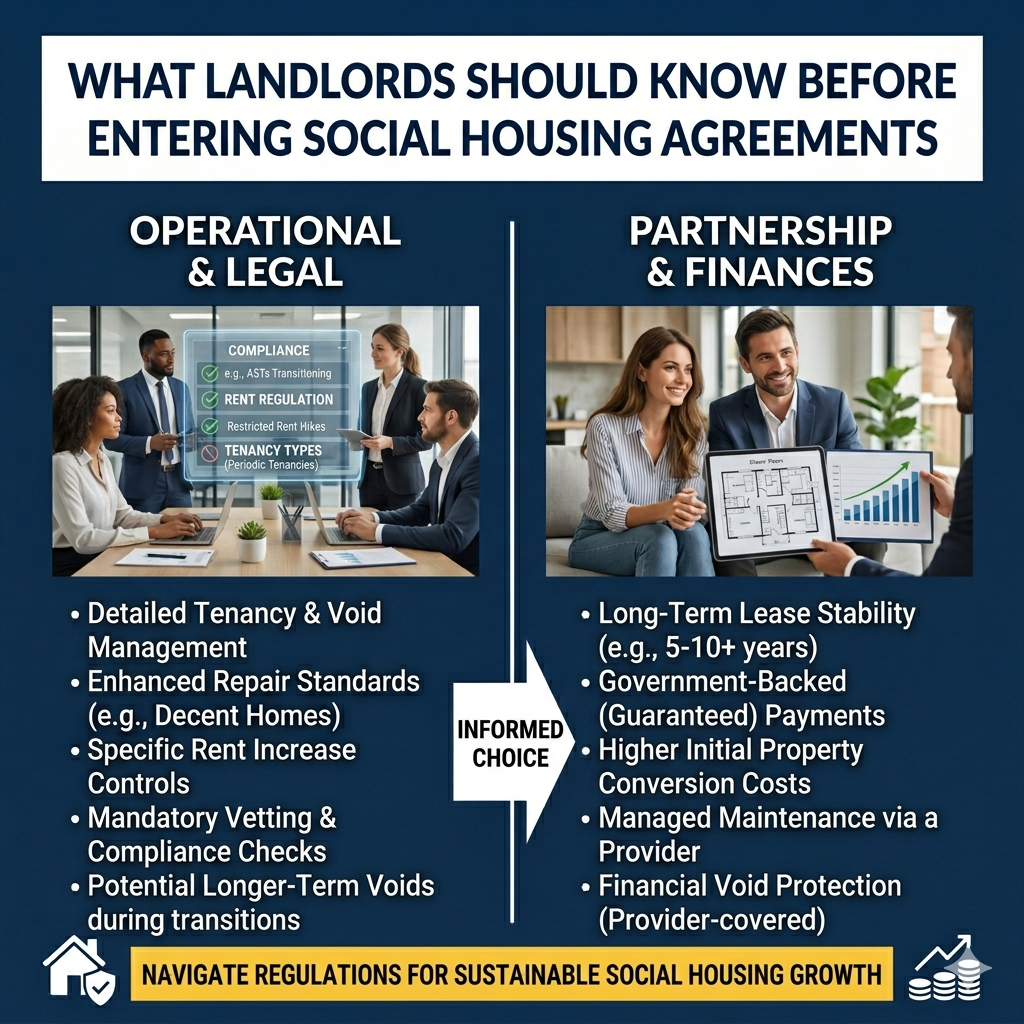
TL;DR Before entering social housing agreements, landlords should understand lease terms, income structure, and responsibilities. When set up correctly, social housing combined with a guaranteed rent scheme offers stable, long-term income with minimal management. What’s in This Article: Introduction Key Things to Understand Before Entering Social Housing Agreements How Social Housing Agreements Work in Practice […]
How Renters Rights Act Impacts Property Management Decisions
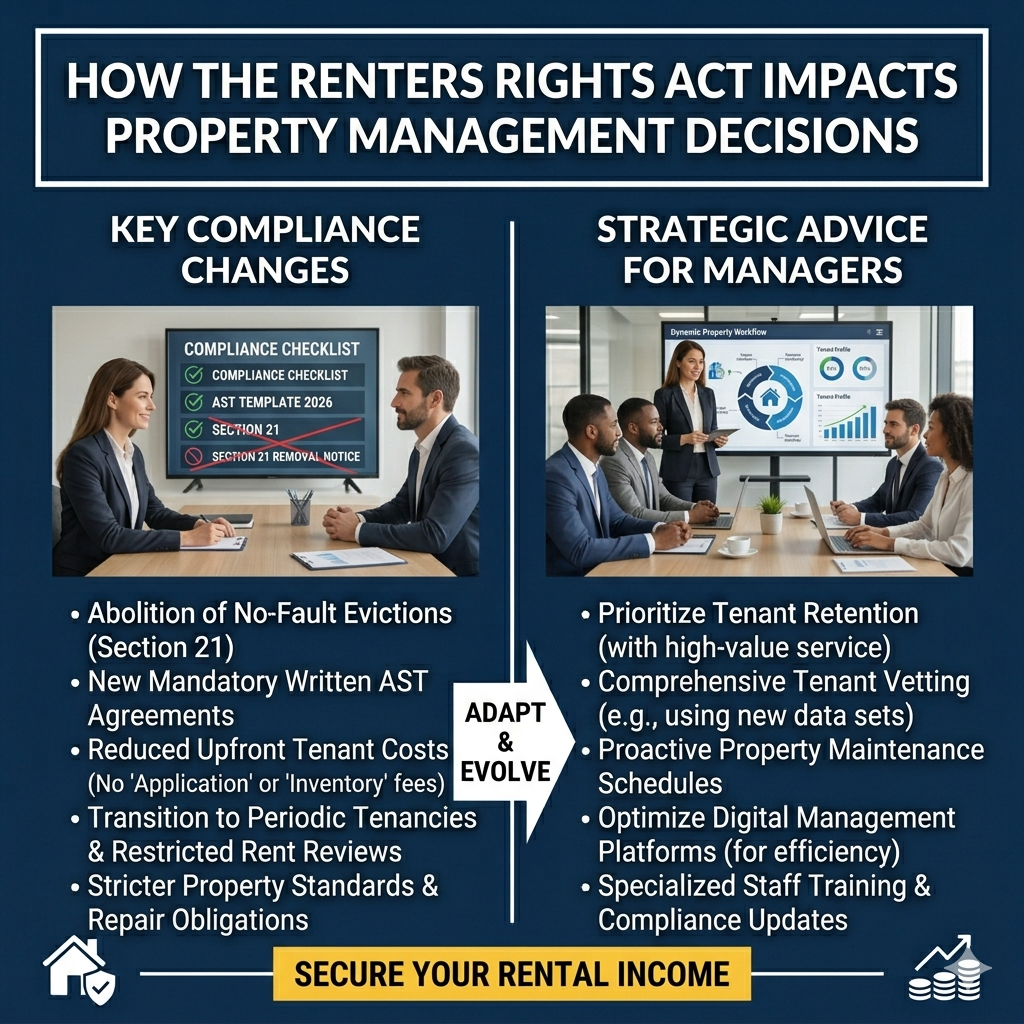
TL;DR The renters rights act is forcing landlords to rethink property management decisions due to increased regulation, reduced control, and higher risk. Many landlords are moving away from traditional management and towards guaranteed rent schemes and long-term leasing for stability. What’s in This Article: Introduction How the Renters Rights Act Is Changing Property Management Why […]
Why Social Housing Appeals to Risk-Averse Landlords
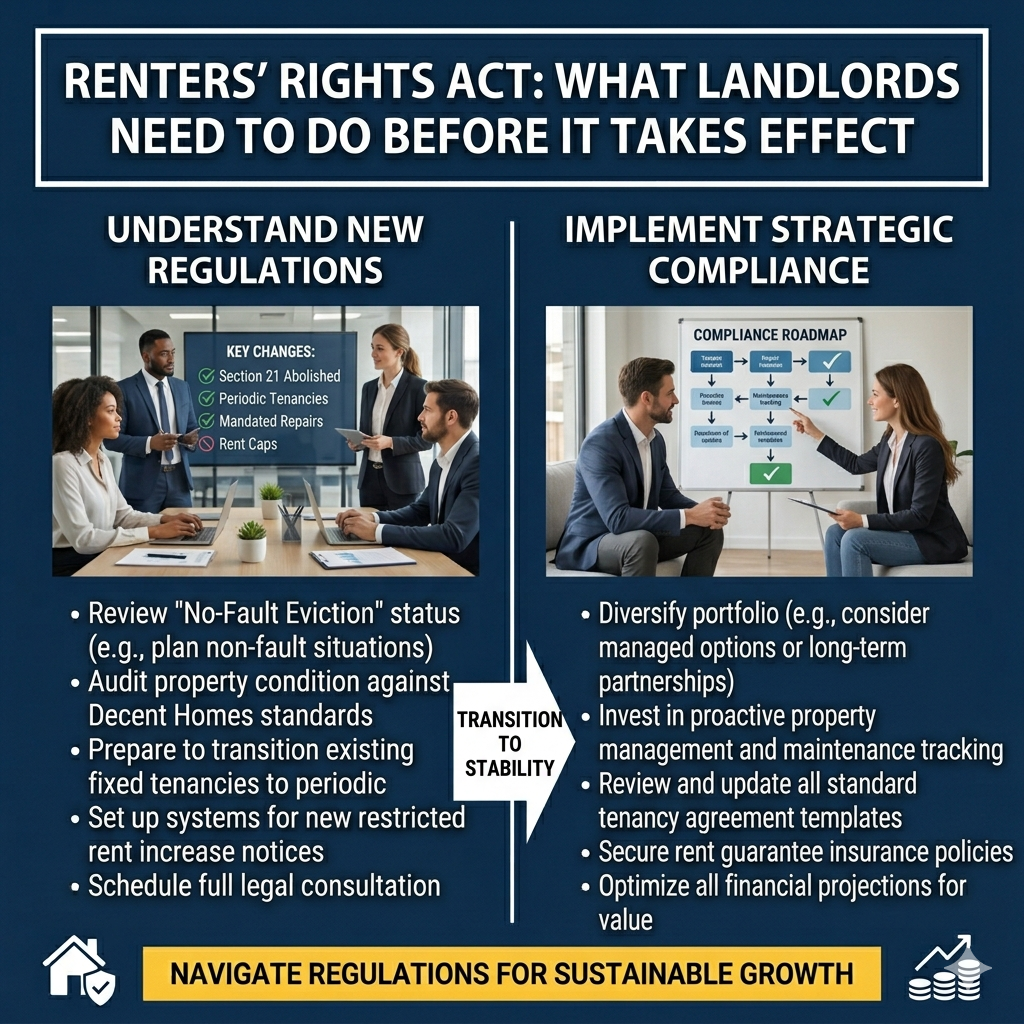
TL;DR Social housing appeals to risk-averse landlords because it reduces exposure to voids, arrears, and tenant management. When combined with a guaranteed rent scheme, it provides predictable income and long-term financial stability. What’s in This Article: Introduction What Risk-Averse Landlords Are Trying to Avoid How Social Housing Reduces Investment Risk The Psychological Benefits of Predictable […]
Renters Rights Act: What Landlords Needs to Do
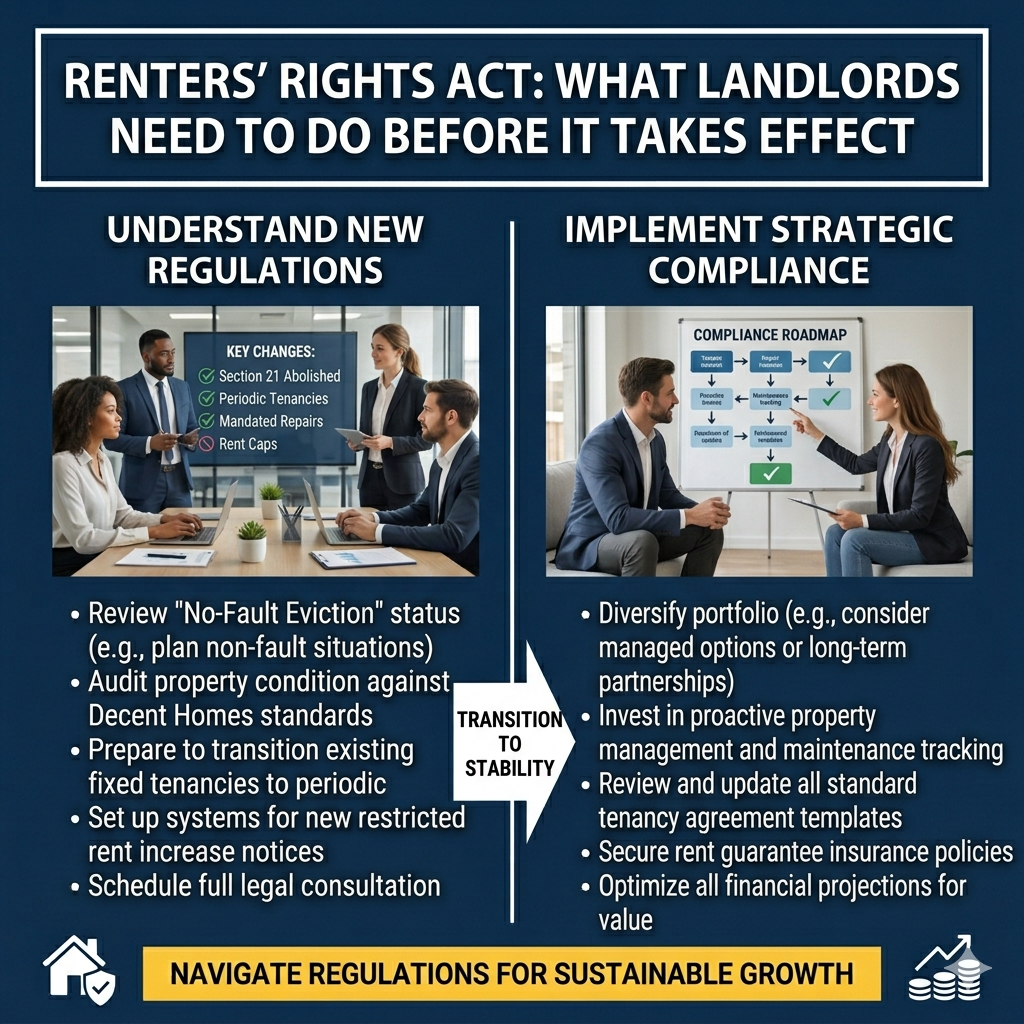
TL;DR Before the renters rights act takes effect, landlords need to review tenancy structures, ensure compliance, and prepare for stricter eviction rules. Many are moving to guaranteed rent schemes and long-term leasing to secure stable income and reduce risk. What’s in This Article: Introduction Key Preparations Landlords Must Make Compliance Checks Before the Renters Rights […]
How Social Housing Can Turn Around Underperforming Properties
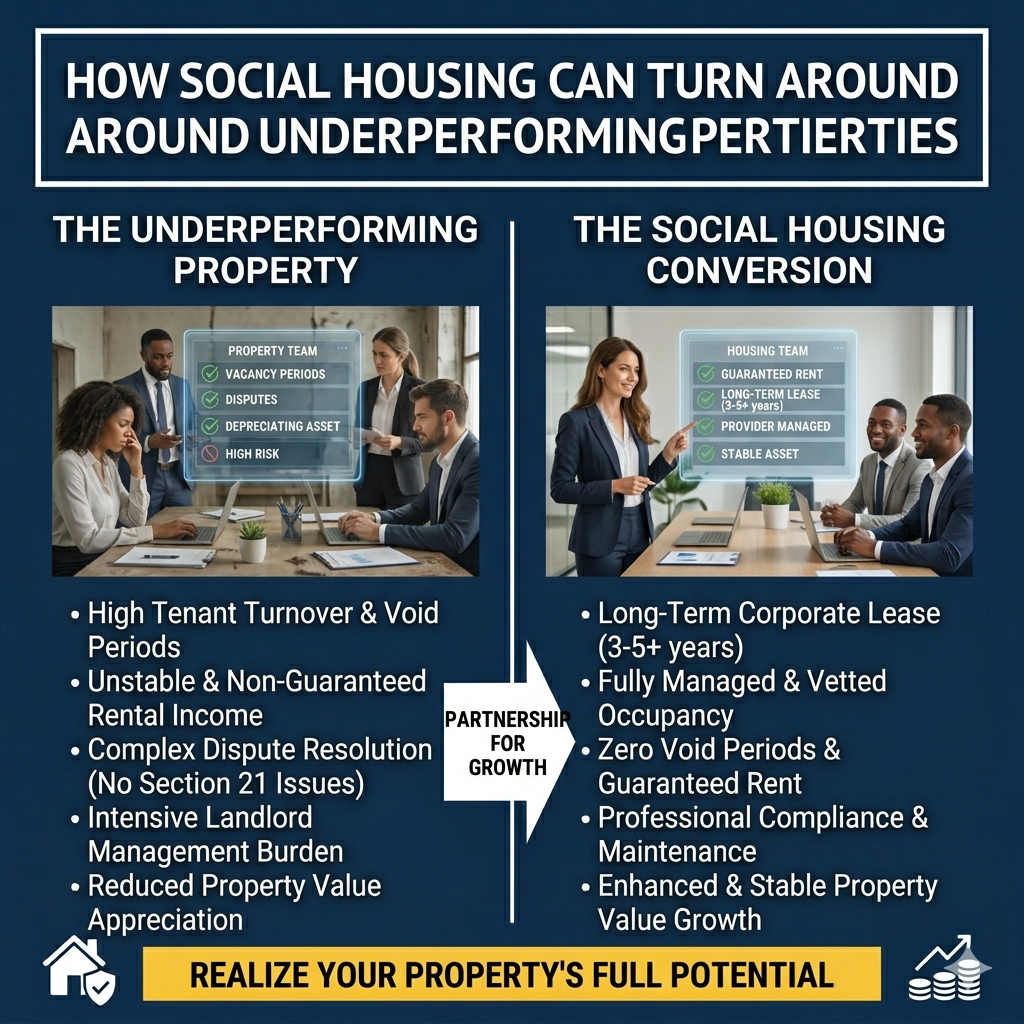
TL;DR Social housing can transform underperforming properties by replacing inconsistent rental income with long-term, guaranteed rent. Landlords can reduce voids, eliminate arrears risk, and stabilise income without managing tenants directly. What’s in This Article: Introduction Why Properties Become Underperforming How Social Housing Improves Property Performance The Financial Impact of Switching to Social Housing When Social […]
Social Housing vs Buy-to-Let: Which Strategy Works Better in 2026?

TL;DR Social housing is increasingly seen as a more stable alternative to buy-to-let in 2026. While buy-to-let can offer higher short-term returns, social housing provides consistent income, reduced risk, and long-term security when combined with guaranteed rent schemes. What’s in This Article: Introduction How Buy-to-Let Works in 2026 How Social Housing Works as a Strategy […]
How the Renters Rights Act Affects Rent Increases
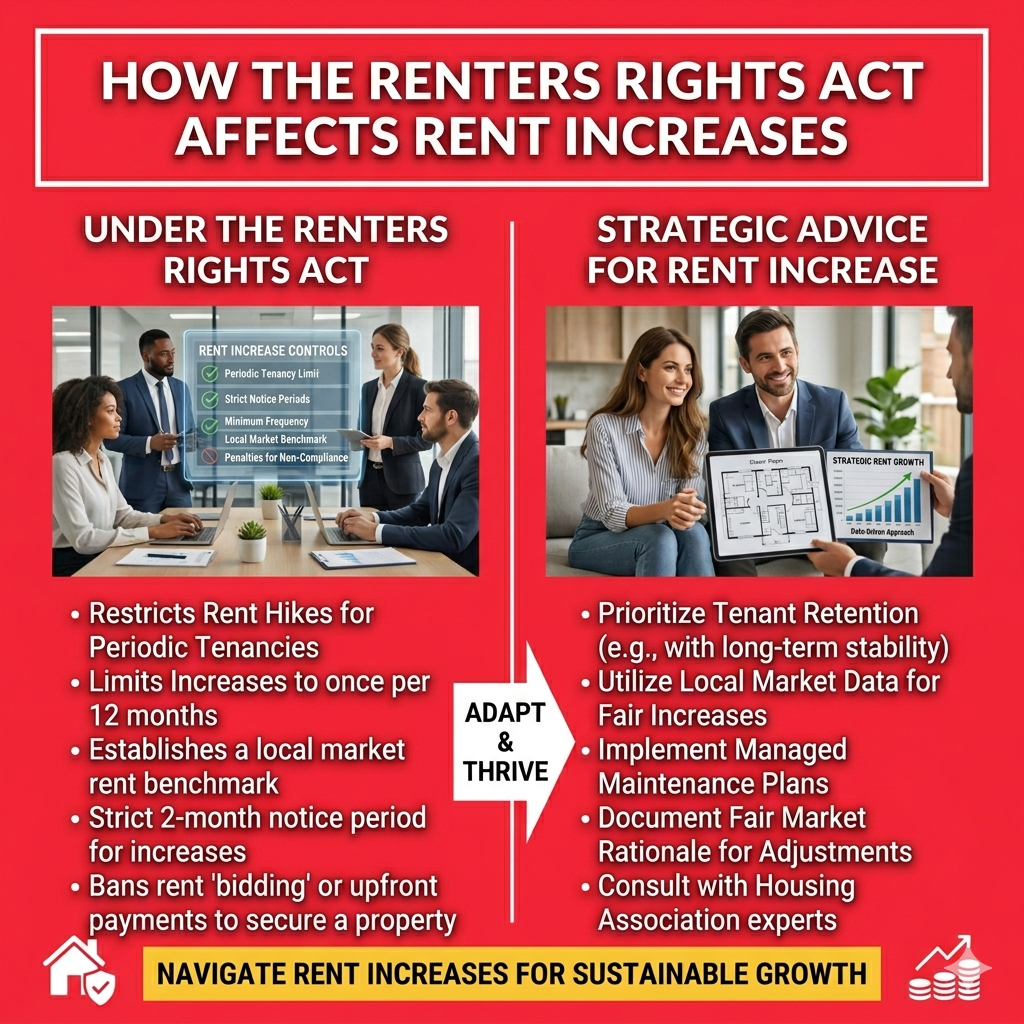
TL;DR The renters rights act is expected to limit how and when landlords can increase rent, making income growth less predictable. Many landlords are turning to guaranteed rent schemes and long-term leasing to maintain stable and consistent rental income. What’s in This Article: Introduction How the Renters Rights Act Changes Rent Increases Why Rent Control […]
Why Social Housing Works for HMO Landlords
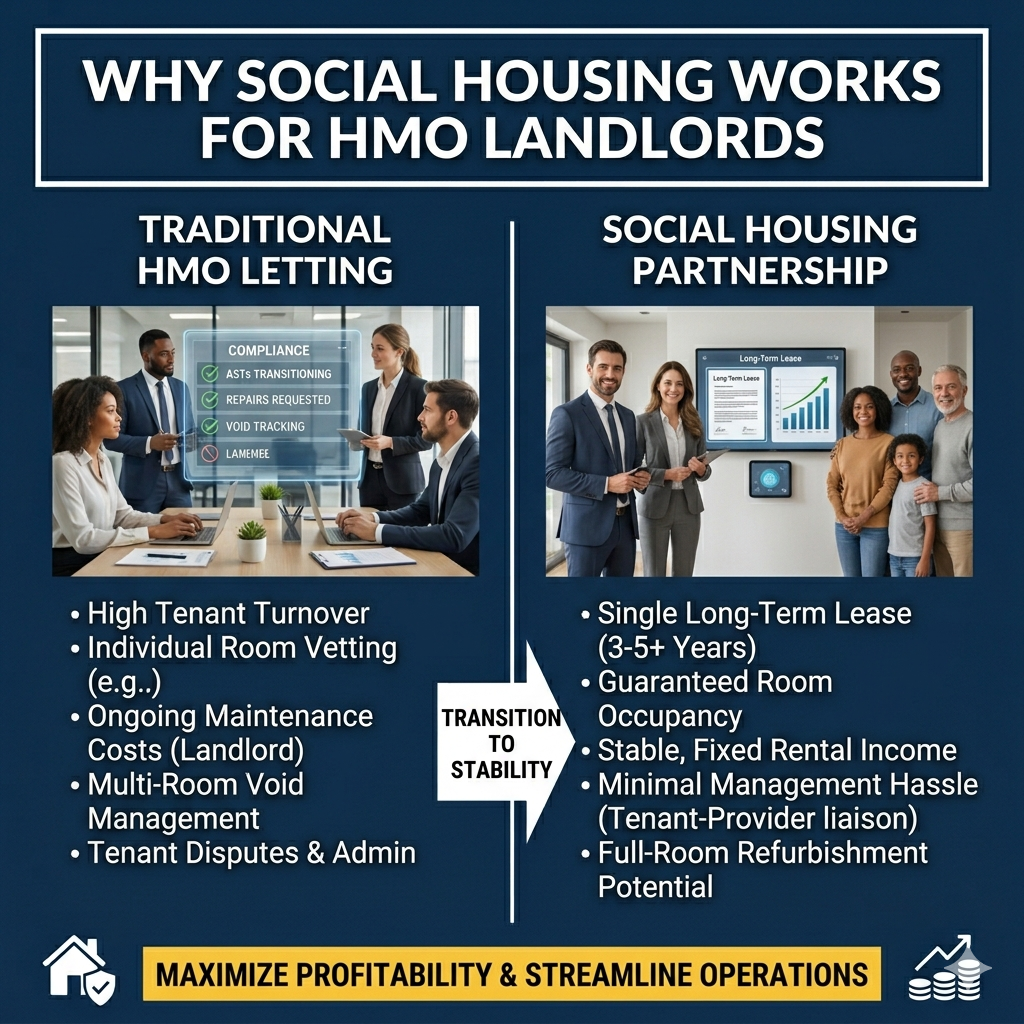
TL;DR Social housing works well for HMO landlords because it offers long-term leasing, consistent occupancy, and predictable income. Many landlords combine social housing with a guaranteed rent scheme to simplify management and secure stable returns. What’s in This Article: Introduction Why HMOs Come with Higher Management Demands How Social Housing Fits HMO Properties The Financial […]
Renters Rights Act: How It Changes Landlord Exit Strategies
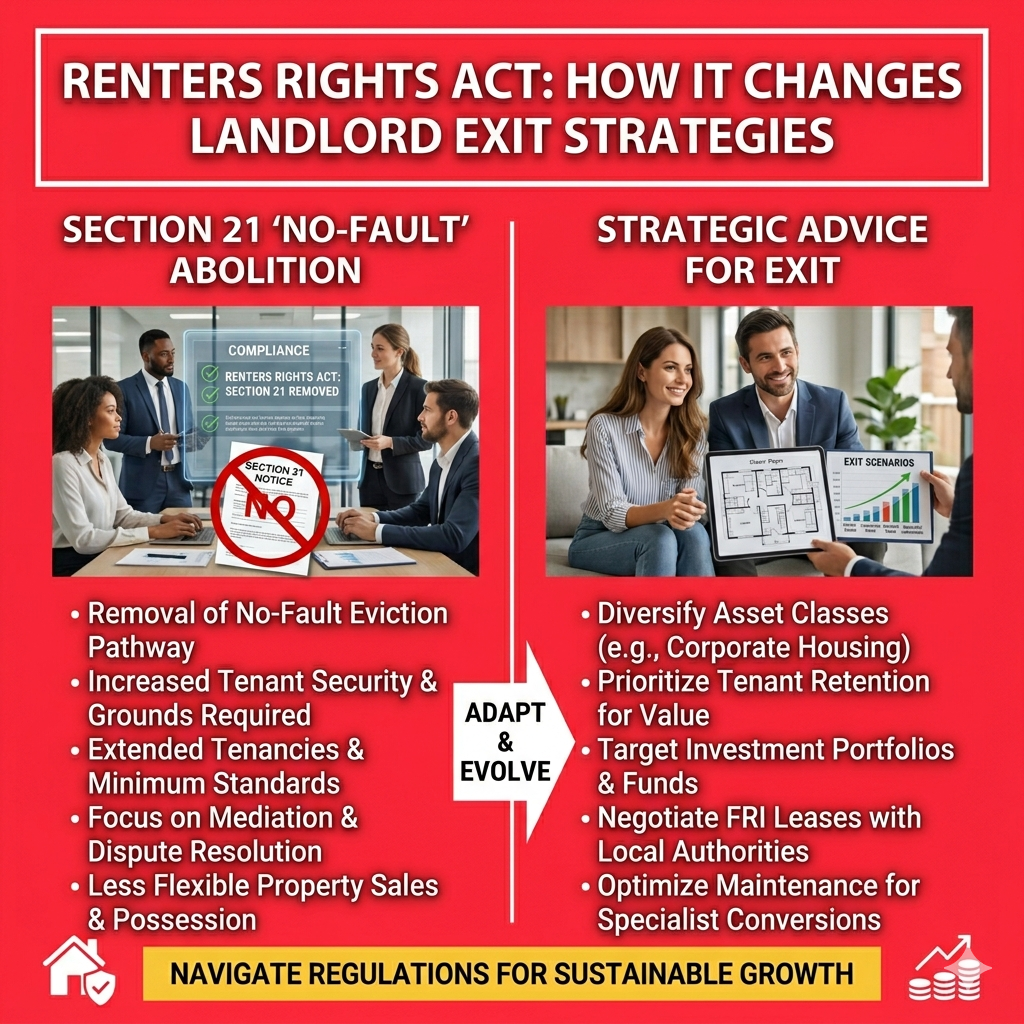
TL;DR The renters rights act is changing how landlords plan their exit strategies by making traditional letting less predictable. Many landlords are now delaying sales, restructuring portfolios, or moving into guaranteed rent schemes to maintain stable income before exiting. What’s in This Article: Introduction How the Renters Rights Act Impacts Exit Planning The Main Exit […]
How Social Housing Reduces Long-Term Property Risk
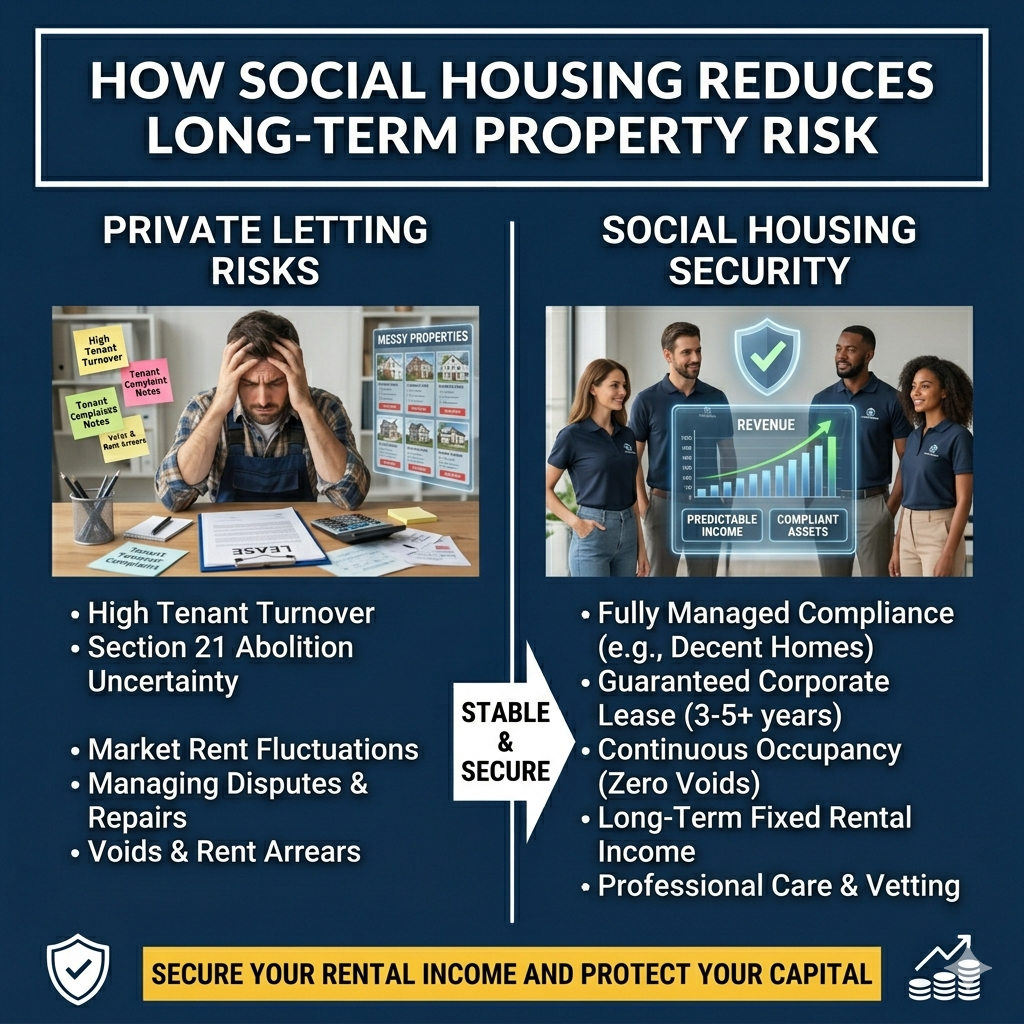
TL;DR Social housing reduces long-term property risk by providing stable income, structured leasing, and minimal tenant-related issues. Many landlords combine social housing with a guaranteed rent scheme to protect against voids, arrears, and ongoing management risks. What’s in This Article: Introduction What Long-Term Property Risk Means for Landlords How Social Housing Reduces Key Risks The […]